

Clients
Images
Articles
Gallery
Clients




News
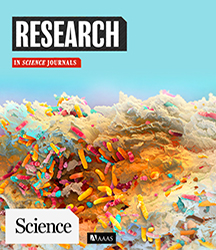
Publication in Science: Research of Gut Microbes
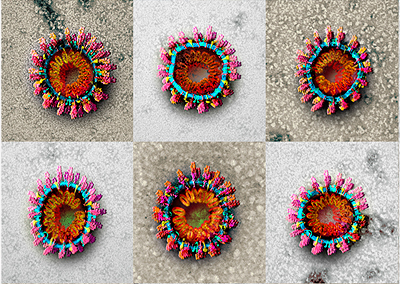
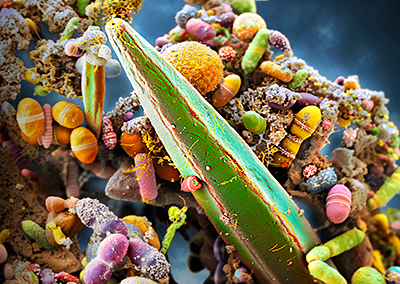
Good competition in the gut: those who use antibiotic prophylaxis to prevent opportunistic infections are at high risk for intestinal colonization and infection by multidrug-resistant organisms. Washington DC, 3 November 2023 To illustrate the results of a new study...
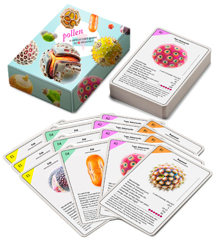
Pollen Card Game
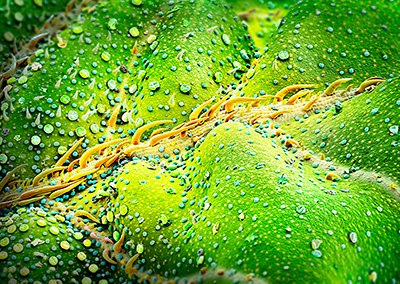
Basel, 23 August, 2023. Micronaut is puplishing it’s first card game. It includes 48 cards featuring artworks by Martin Oeggerli and invites you to dive into his pollen universe. The pollen card game combines art & science in a playful way, with interesting and...
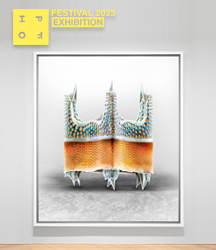
IPFO photo Festival 2023
Olten, 23 Aug 2023. Every second year, some of the world’s leading photographers, visual story tellers, and photo directors meet in Olten to celebrate the IPFO photo festival. This year, Martin Oeggerli has been invited to present his artworks at the Mokka Rubin. ...
Contact
Micronaut images are rights-managed. If you want to get a quote, please contact us, providing the following information:
(1) image name
(2) specific use,
(3) industry,
(4) distribution area,
(5) format,
(6) circulation or print run,
(7) duration.
Please note that we cannot answer incomplete requests.
Thank you.
Address
Micronaut GmbH
Laufenstr. 16
CH-4053 Basel
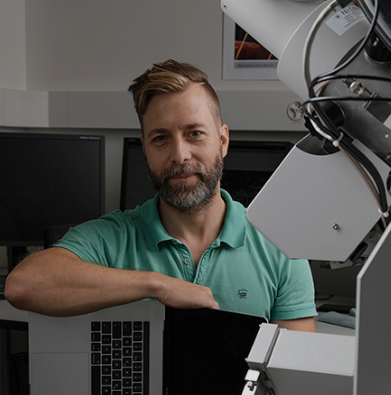
© Pablo Wünsch-Blanco (2019)
Martin Oeggerli
Styling himself as a Micronaut—explorer of invisible worlds—Oeggerli creates incredible microscopic photographs using a combination of scanning electron microscopy (SEM) and post-processing coloration.
Technology
Utilizing electrons instead of photons allows to find and explore invisibly small creatures and materials, often with magnifications up to 100’000-times or more. By combining hi-tech SEM with his signature-style coloration, Micronaut exposes surreal looking motives down to the smallest details and thereby expands the limits of traditional photography
To obtain exquisite specimens, that are in perfect condition, Oeggerli works closely with research scientists. Each sample has to be carefully dried using special solvents to maintain its natural shape and appearance. After this the sample is also coated with a thin layer of gold, to make it electronically conductive. It’s one of several critical steps during the conservational process which will finally affect the image quality and maximum printable size of every resultant picture.


Basel Area Children’s Cancer Foundation
As some of you may know, I have been working in cancer research for over 10 years. Helping children suffering from cancer, and their families, is a subject very close to my heart. On behalf of the “Stiftung für krebskranke Kinder”, I encourage you to look at the links and movie below, to see how the Foundation helps brave kids – and how it could do even more with your generous support!
Further information:

Newsletter
Join our Newsletter and become a Micronaut member at the same time!